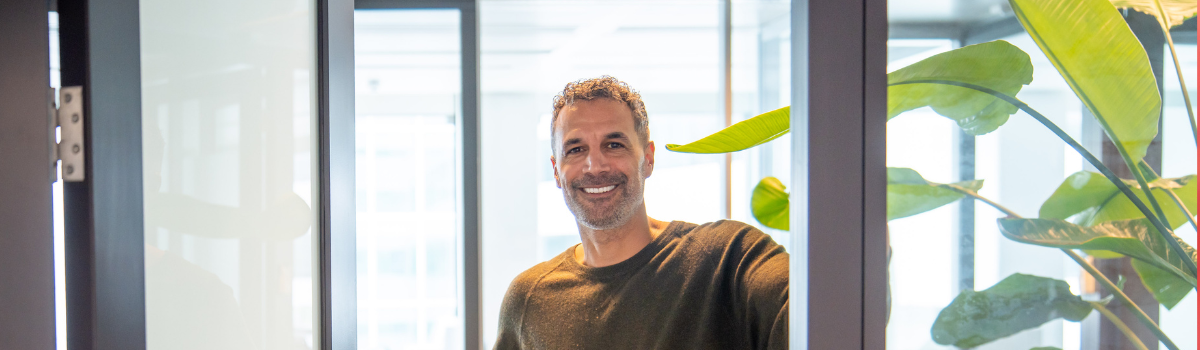
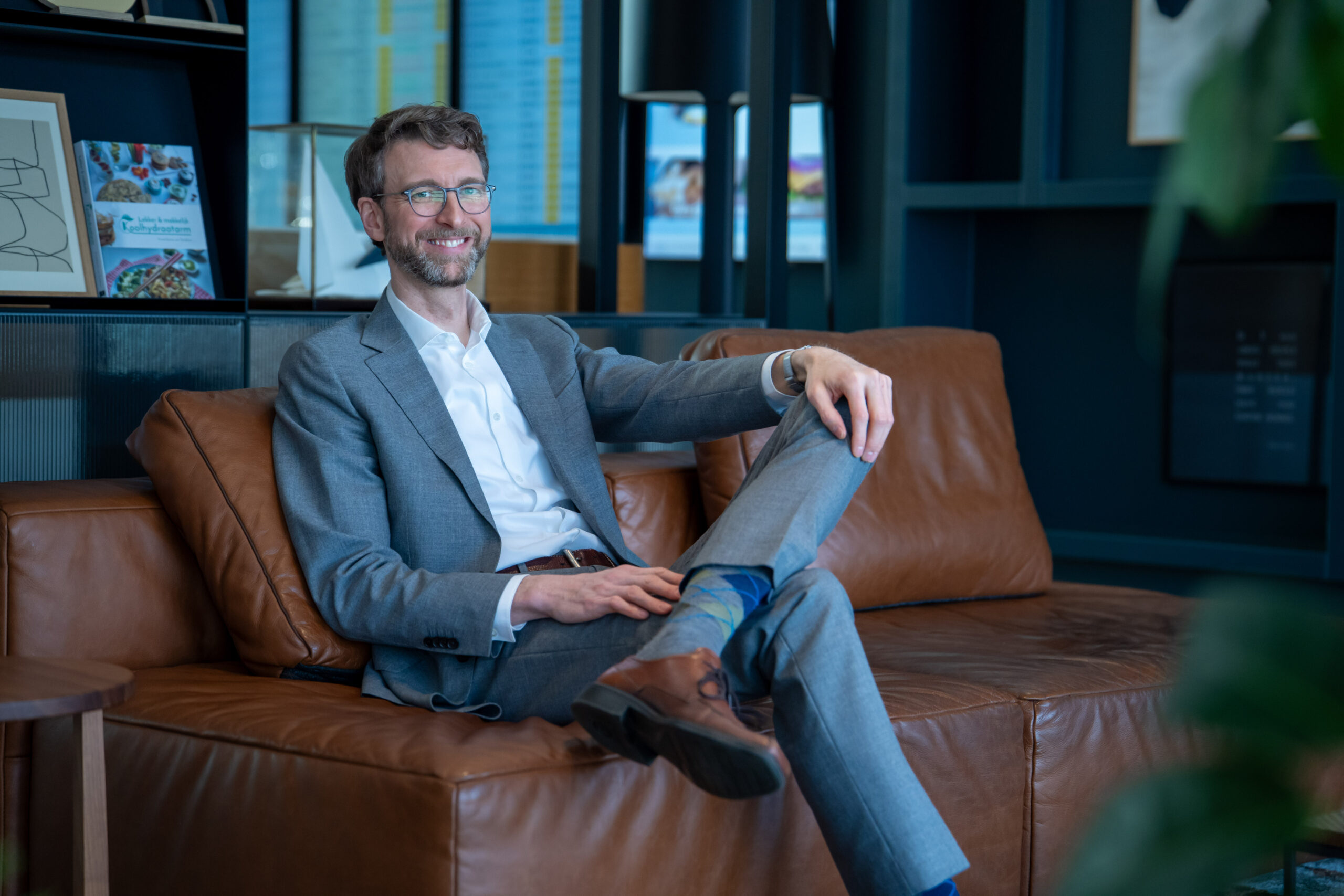
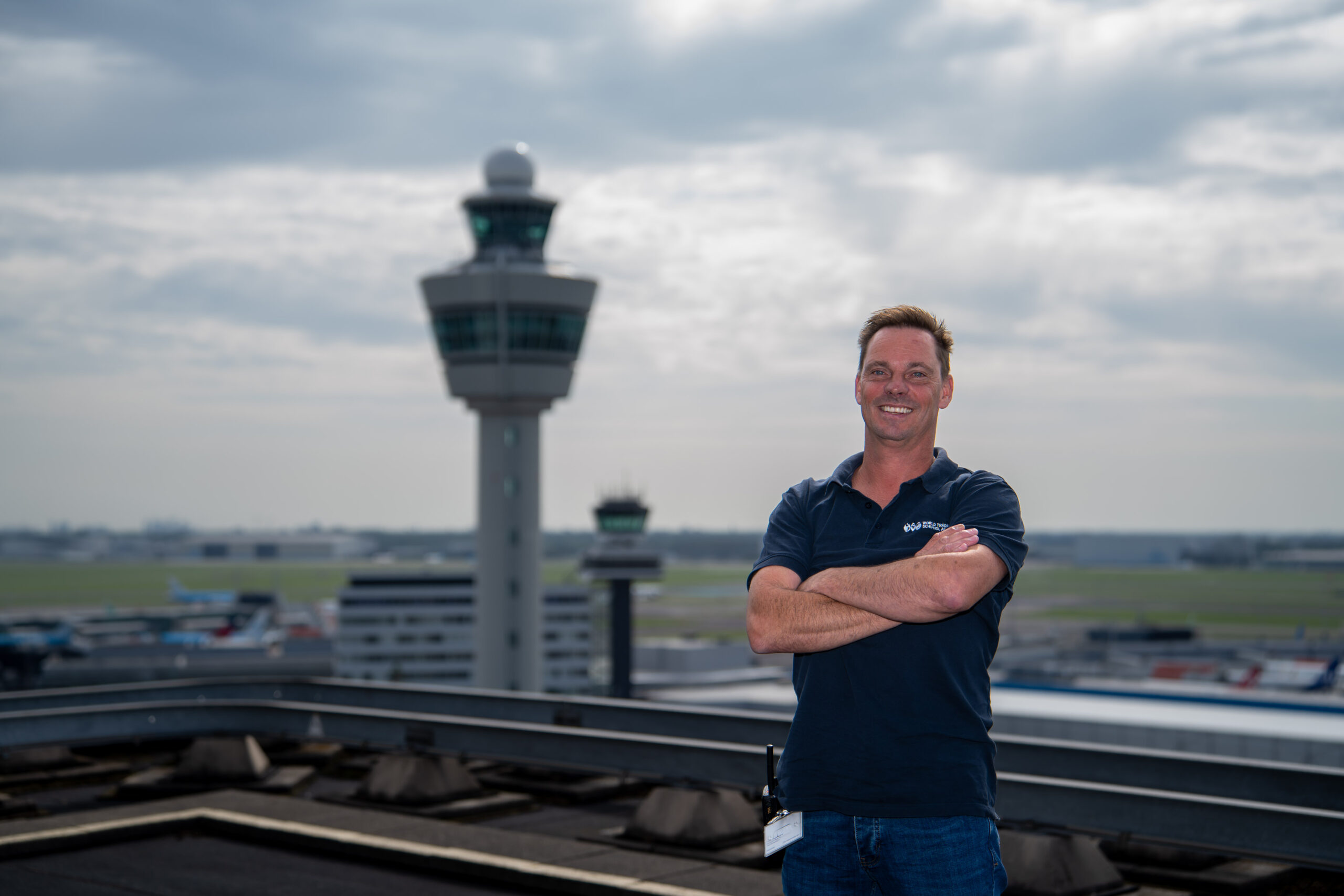
Whoever works at WTC Schiphol Airport won’t easily spot Sylvan relaxing on the Plaza. He’s not the type who glides from conversation to conversation or someone you meet daily at the coffee bar. His route through the building is straightforward and intentional: from the parking garage into the elevator, straight to his office. But behind that straight line lies a story that is anything but simple. It begins in Curaçao, moves across football fields throughout the Netherlands, cuts straight through the corporate world of the Zuidas, and eventually lands between the towers of Schiphol. It’s a story about ambition, discipline, loyalty, and above all: doing rather than talking.
First memory: Schiphol
Sylvan was born in Curaçao. His first real memory of the Netherlands is almost symbolic in hindsight: the moment he stepped off a plane at Schiphol for the first time. He was six. It was his very first flight, and the image of that arrival stayed with him as if something in him already sensed that this place would matter again one day. Years later, he would open an office in that very same building. The circle, as he puts it, came fully around.
Although Curaçao always remained in his heart, the Netherlands became the place of school, studies, and development. And early on he discovered the thing that still drives him today: winning. Not a little but completely. Not only on the football field, but in everything he does.
Football
Football was his world for years. He played at a high level at AFC and OFC Oostzaan and collected memories you wouldn’t immediately expect from someone who now spends his days with compliance, DNB licenses, and international corporate structures.
He once played against Luis Enrique, then still a player at FC Barcelona, now a multiple Champions League‑winning coach. He swapped shirts with Rafael Nadal’s uncle, who also played for Barcelona at the time.
Beautiful personal moments but around eighteen, he realized the absolute top might not be realistic. And because losing was not an option, he chose before someone else would choose for him. His father always prioritised school over sports, he was doing VWO, and he knew that pushing on without perspective didn’t fit him. So he quit, shifted his focus to studying, and decided that if he did something, it had to be all the way. That mentality shaped the rest of his career.
From tax Advisor to executor
After his studies, Sylvan started his career in tax. He worked in the field for fourteen years, including nearly eight years at PwC Amsterdam. He advised international companies on structures, taxes, and how to set up their European operations. But over time, one thing bothered him more and more: the advice stayed on paper. He never saw whether it actually happened. The gap between theory and practice grew so large that he could no longer ignore it.
In 2013 he made a decision that would change his career forever. He left the advisory world and founded a firm that not only looks at what needs to be done, but actually does it. Setting up entities, co‑directorships with DNB licenses, accounting, payroll, VAT processes, treasury, in the early years, he did it all himself. They were intense years, but exactly what he needed: the direct connection between advising and executing.
Why American Companies
In the early phase he travelled the world. India, South America, Central America, Georgia, he explored everywhere his firm could add value. Ultimately the answer turned out to be surprisingly logical: Americans.
The way Americans work suits him perfectly. Clear. Ambitious. Direct. All or nothing.
Today, more than ninety percent of his clients come from the United States, not by coincidence, but by choice.
Between 2015 and 2022, Sylvan witnessed the explosive growth of venture‑capital‑funded tech companies. Profit was irrelevant, growth was everything. Founders became rich, companies sprang up like mushrooms, and nine out of ten failed. But that one surviving company made everything worthwhile. Then in 2022, the market shifted. Capital froze. Organisations had to scale back. Dutch teams shrank. Budgets tightened. Sylvan and his team guided several companies through those difficult transitions.
Now, a few years later, capital is flowing abundantly again. The energy is back. The momentum too. And that once again fits him perfectly.
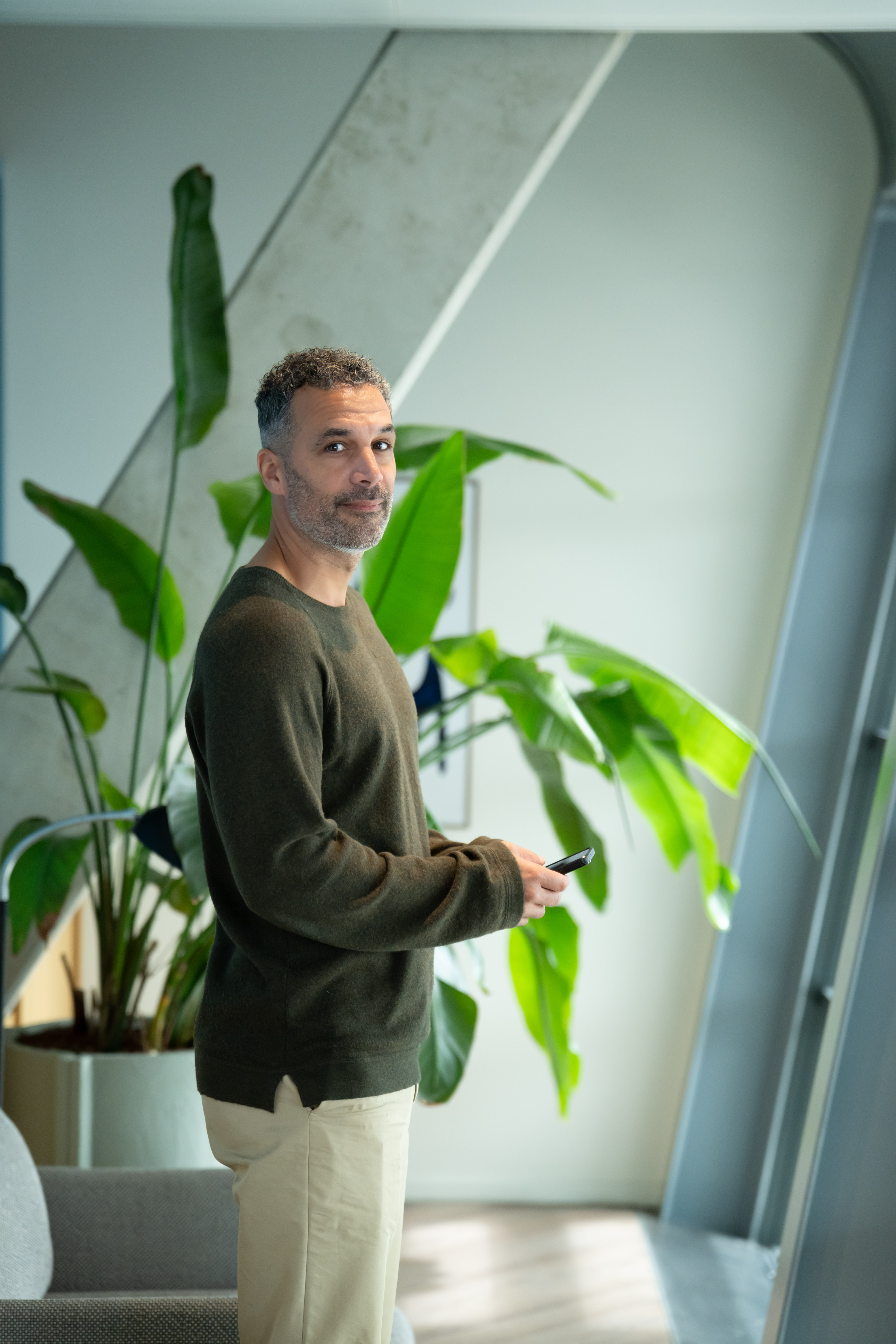
Building relationships in companies where no one knows what the other does
What Sylvan does rarely revolves around numbers. It’s about people. Trust. Navigating organisations so large that one department often has no idea what another is doing. Some see him as payroll provider, others as accountant, others as something entirely different, it depends on where in the organisation you stand.
His strength lies in building relationships across all those layers. Americans don’t like being told what to do, so he doesn’t tell them. Instead, he asks questions. Why? Why now? Why this way? Through that rhythm, they discover for themselves how Europe works and where the pitfalls lie. It’s subtle but effective. And that approach ensures some clients have stayed with him for eleven years even after three changes of contact person. They stay because he guided them through every phase: from zero, to multiple entities, to international expansion, and sometimes back again.
One company he supported grew from nothing to six Dutch entities with a valuation of USD 16 billion. At its peak, around €2.5 billion flowed through Dutch accounts. Later the valuation fell to around USD 180 million. “That’s reality,” he says. “The bubble bursts. You learn. And you move on.”
Why WTC Schiphol Airport was the natural choice
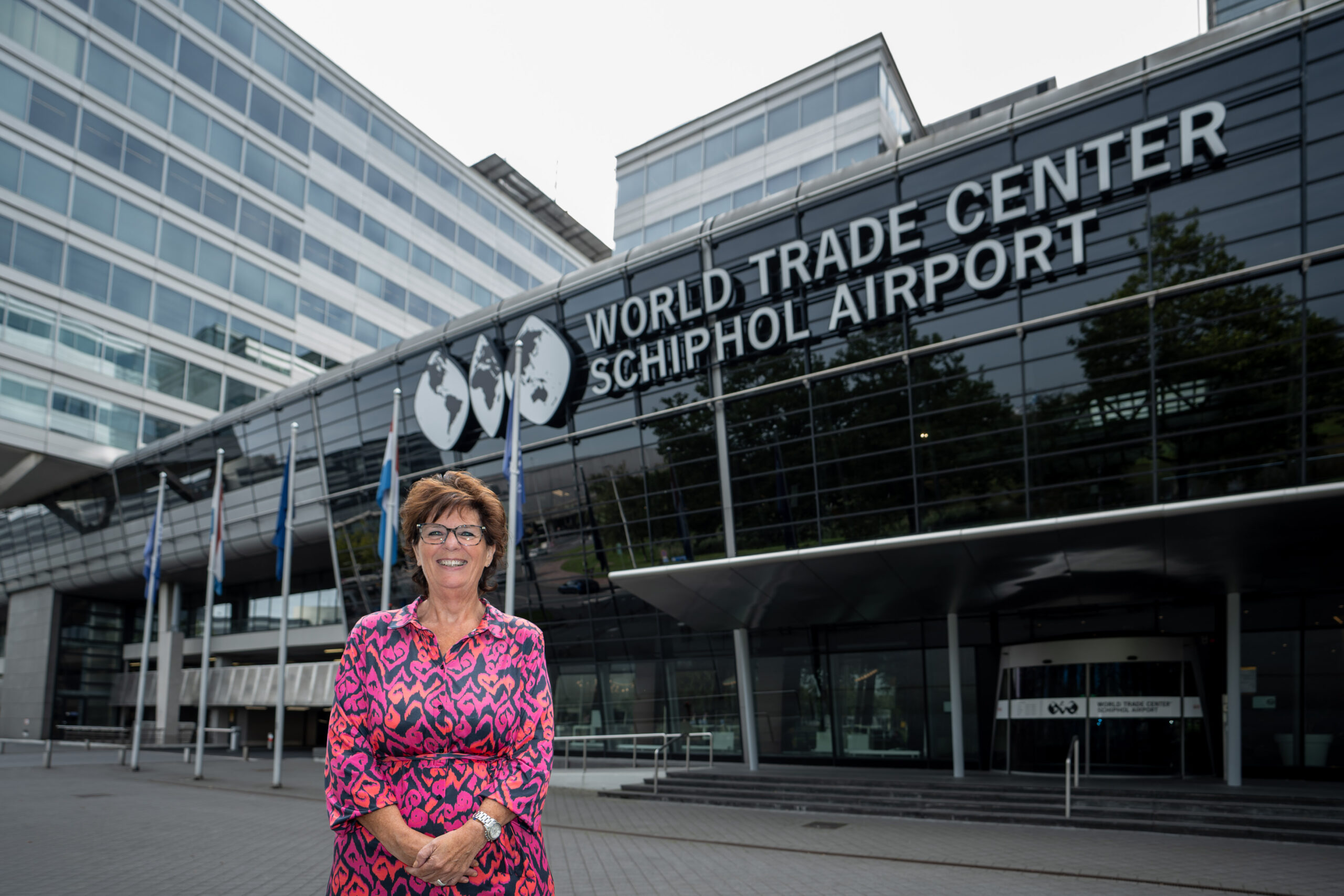
His move to WTC Schiphol Airport came partly from frustration and partly from intuition. On the Zuidas he found it cold and impersonal. Long traffic jams on Mahlerlaan and Boelelaan didn’t help. When he first walked into WTC Schiphol Airport, he was greeted in a way he wasn’t used to. Warm. Attentive. Human. A few days later, they greeted him by name. That was enough. WTC Schiphol Airport became his place.
The location is perfect: people from Utrecht, The Hague and Rotterdam get there easily, international clients walk in straight from the terminal, and he himself is at his office in eight minutes. His office expanded from one room to two. The wall in between came down. It all felt natural.
A team that grows through openness
What Sylvan is most proud of is his team. The growth he sees in people, professionally, personally, substantively, is what moves him most. He builds a culture where people can be themselves, where there is laughter, and where openness is normal.
He speaks to colleagues like he speaks to friends, because it works, because it builds atmosphere, and because it gets people moving. Not everyone dares at first. But more and more people do. And that, he says, is perhaps the most beautiful thing happening in his company.
Three home countries
Although his work is based in the Netherlands, his identity spans Amsterdam, Curaçao and Ibiza. Amsterdam is home: compact, safe, lively. Curaçao is origin: family, warmth, roots. Ibiza is rest: a stress‑free island where he would love to build, literally. His large Amsterdam garden was designed and built by himself. A quiet reference to his youth, where building and creating mattered just as much as football.
What he passes on
To his children he passes on what shaped him: never give up, you can achieve anything, and embrace boredom because it sparks creativity. They join him almost every weekend at his matches. They see him play. They see him work. They learn by watching.