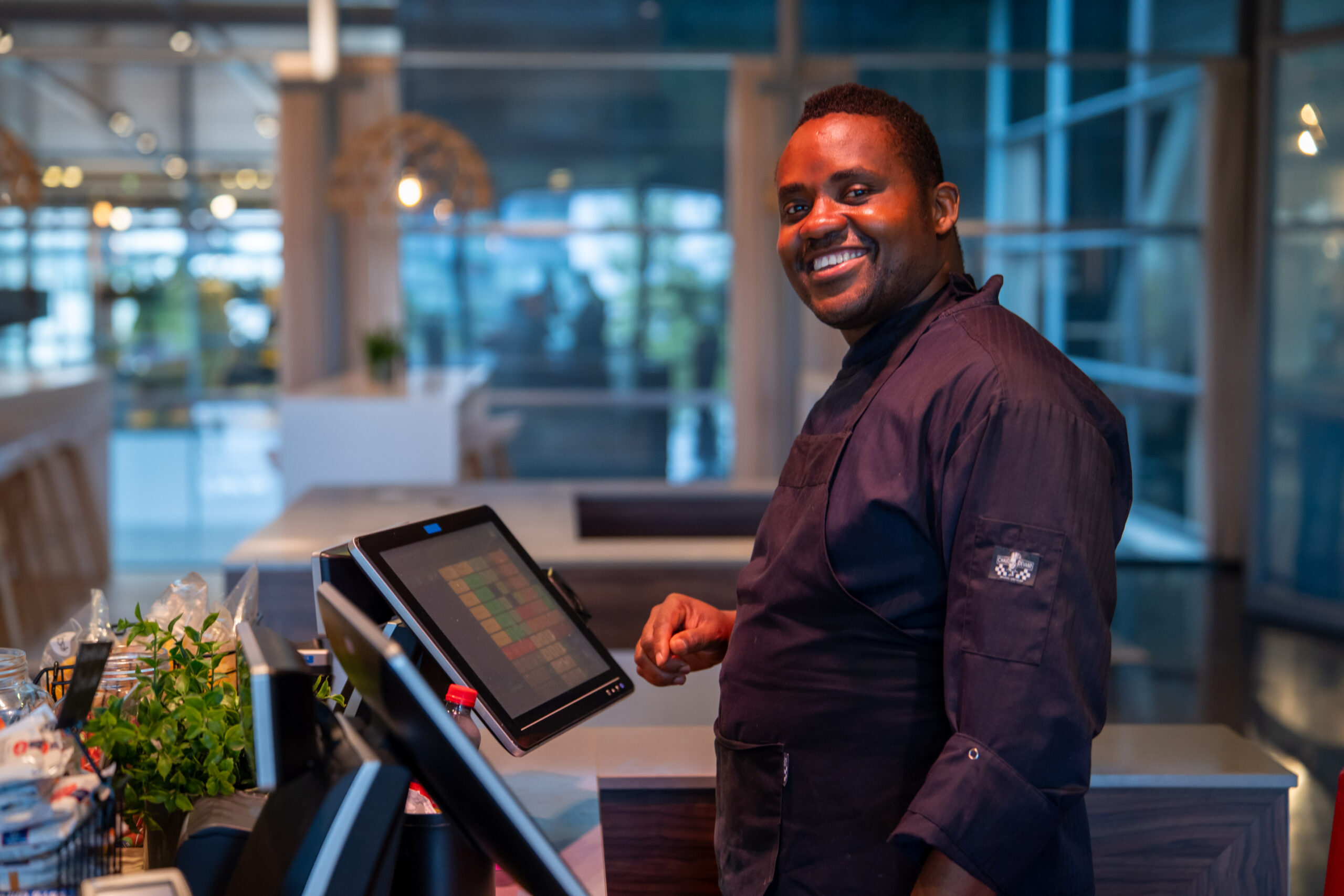
Anyone walking into Juliet’s Kitchen recognizes him almost immediately: Samuel. His smile, his greeting, the cheerful energy that seems to push him forward.
“I love people,” he says. And you can feel it. He is a familiar face, a bright light in the building. But behind that cheerful presence lies a moving life story that began in a completely different world.
e.
Samuel grew up in eastern Sierra Leone. When he talks about his childhood, a smile appears: “The first fifteen years were really wonderful. We had everything children should have. Playing outside, swimming in rivers, friends in the village.”
Until the civil war came closer. Rebels appeared in the eastern provinces, young people were threatened, and freedom became uncertain. “You had to flee or join them,” he says.
At the age of fifteen, accompanied by the Red Cross, he boarded a boat alone, his first time at sea, heading toward safety. In the Netherlands, asylum seeker centers followed, along with procedures and uncertainty. “The first years weren’t easy. I didn’t know where my parents were. But I had to keep going. I had been promised a better life.”
He passed his integration exam, learned the language, and slowly found his way. Only years later did he learn that his father had paid money to help him escape. “That’s when I understood why I had to leave. My parents did everything to protect me.”
Amsterdam became his home through a coincidental but special encounter. In 2009, he was DJ’ing at a party in Almere when he saw her, a young woman from Sierra Leone, just like him. “It felt right immediately,” he says. She lived in Amsterdam, he in Kampen. He laughs:
“I said, ‘Come to Kampen.’ She said, ‘I’m not going to Kampen, that’s a village!’” He moved to Amsterdam.
They got married in 2010. They now have four children. “They are my greatest pride,” he says, beaming.
When Samuel started working at Schiphol in 2010, he truly worked everywhere: cleaning, catering, mail services, even the KLM hangar. “I worked everywhere. But I really wanted to stay in one place.” During one of those many shifts, he ended up at WTC Schiphol Airport. A colleague noticed his dedication and asked: “Would you like to keep working with us?” It was exactly what he was looking for: stability, people, connection.
In 2013, in the middle of a turbulent period of reorganizations, he was offered a contract.
“I was so happy. A lot of people had to leave, but I was allowed to stay. I will never forget that.” From that moment on, WTC Schiphol Airport truly became his place. He worked a lot at the front of the building, among tenants, visitors, and colleagues.
“When people see you often, they get to know you. They say: ‘Hey, don’t I know you?’”
His familiarity in the building is easy to explain: he is there every day, visible, warm, cheerful.
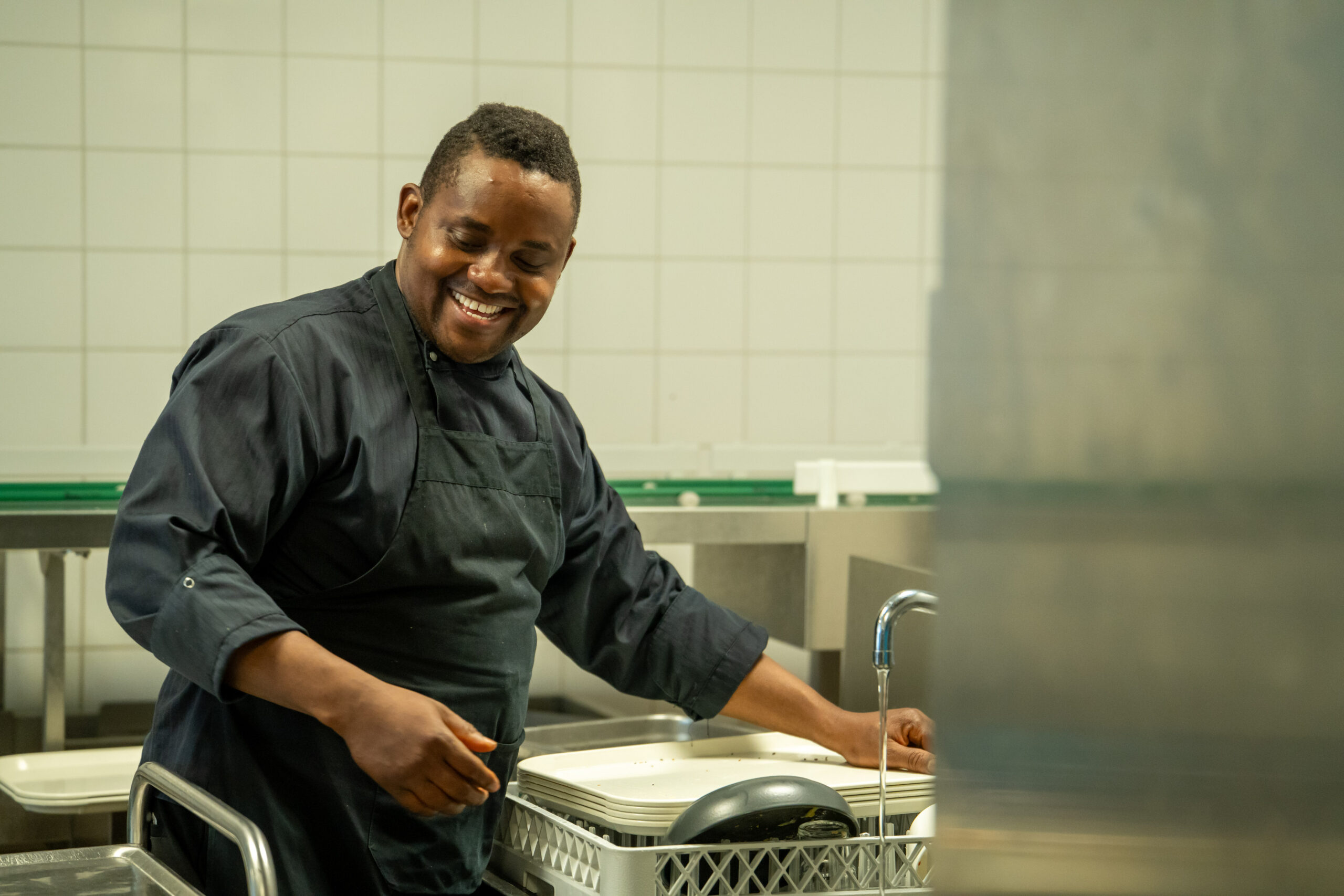
Anyone who thinks Samuel sits still at home is mistaken. “I do a lot,” he says with a laugh, and that’s an understatement.
He has played table tennis his entire life, trains several times a week, and plays for a club.
“I’d love to reach the First Division, but that would mean training five times a week. That doesn’t work with everything else I do.”
Music is his second nature. He produces pop and gospel music, even started a band with his children, and regularly performs at church. “One son plays drums, another plays keyboard, and my daughters sing. We even have our own song now.”
In addition, he is a sector pastor within an international church with thousands of branches.
“A pastor helps people. You teach, you listen, you pray. It’s my calling.” His faith gives him direction: “True joy doesn’t come from money. Joy comes from God.”
Ask him for advice, and his answer is clear: “You have to discover yourself. Appreciate what you’ve been through. Be grateful.”
He doesn’t turn away from the difficult moments in his life but carries them as building blocks. “I came here alone, with nothing. And look at me now. I have a wife, children, a church, and a life. That is grace.” Twenty years ago, he took his first steps at Schiphol. He never left. Not because he had to, but because it felt right. A new home.