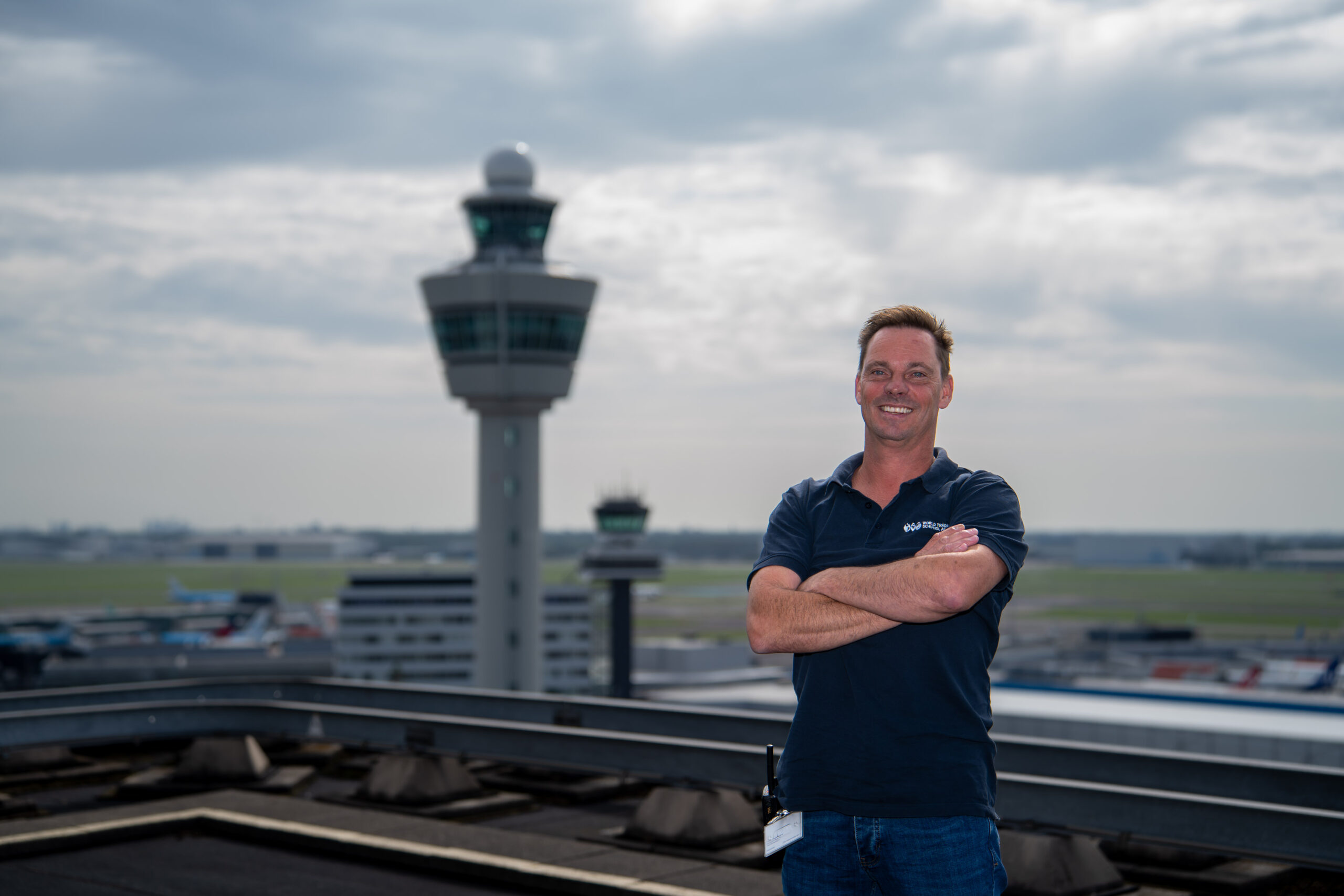
Those who walk through WTC Schiphol Airport usually don’t notice them right away: the people who keep a global operation running behind the scenes. But those who look closely may sometimes spot him in conversation, in meetings, or on his way to the terminal: Markus Wegner. Calm, thoughtful, friendly. Not a man of volume, but of impact. Yet his story begins far beyond Schiphol, in a world of technology, tools, and a curiosity to understand how things really work.
The early years
Markus was born in the United States into a family with German roots. His father was an engineer and an entrepreneur, and at home blueprints, screwdrivers, and precision were the most normal things in the world. “I was always building,” he says. The technical side was not only in his head, but also in his hands. Moving into aerospace engineering therefore felt like a natural step. Aviation had something elegant, something mathematical, but above all something that sparked his curiosity every single day. Becoming a pilot was even a serious option for a while, but in the early 2000s that meant a long, expensive, and uncertain path. Markus chose the world behind the scenes: the operation itself.
Career at Delta
His career at Delta started in data analysis: forecasting, models, planning. All very precise, analytical work, but also work at a distance. “You create analyses that others are responsible for. I wanted to be responsible myself.” Schiphol offered exactly that. Amsterdam was one of Delta’s largest international stations, a place where he could get closer: closer to the gate, closer to the people, closer to the decisions that matter.
When Markus started in the Netherlands, Delta Amsterdam consisted of three people. The rest of the work was done through KLM or temporary staffing arrangements. Functionally it worked, but culturally it was loose sand. Markus saw that it had to be different, not by forcing it, but by building it. What followed was a process of nearly ten years in which roles, reporting lines, contracts, and culture gradually merged into a single whole. Today there is one integrated Delta team. The Redcoat team continues to grow, and total Delta staffing is now approaching seventy colleagues. What makes Markus most proud is that despite all these changes, humanity was preserved. “People help one another. They don’t let things drop.”
The operation itself runs on three recognizable layers that continuously reinforce one another. On the floor are the Redcoats, visible to passengers and the face of Delta in the terminal. The Operational Service Managers keep the overview, make decisions, and form the backbone between strategy and execution. And in the tower, the operation is monitored in real time, analysed, and adjusted where necessary. Everything is interconnected, and everything is under constant time pressure. It is a system that only works when people trust and strengthen one another.
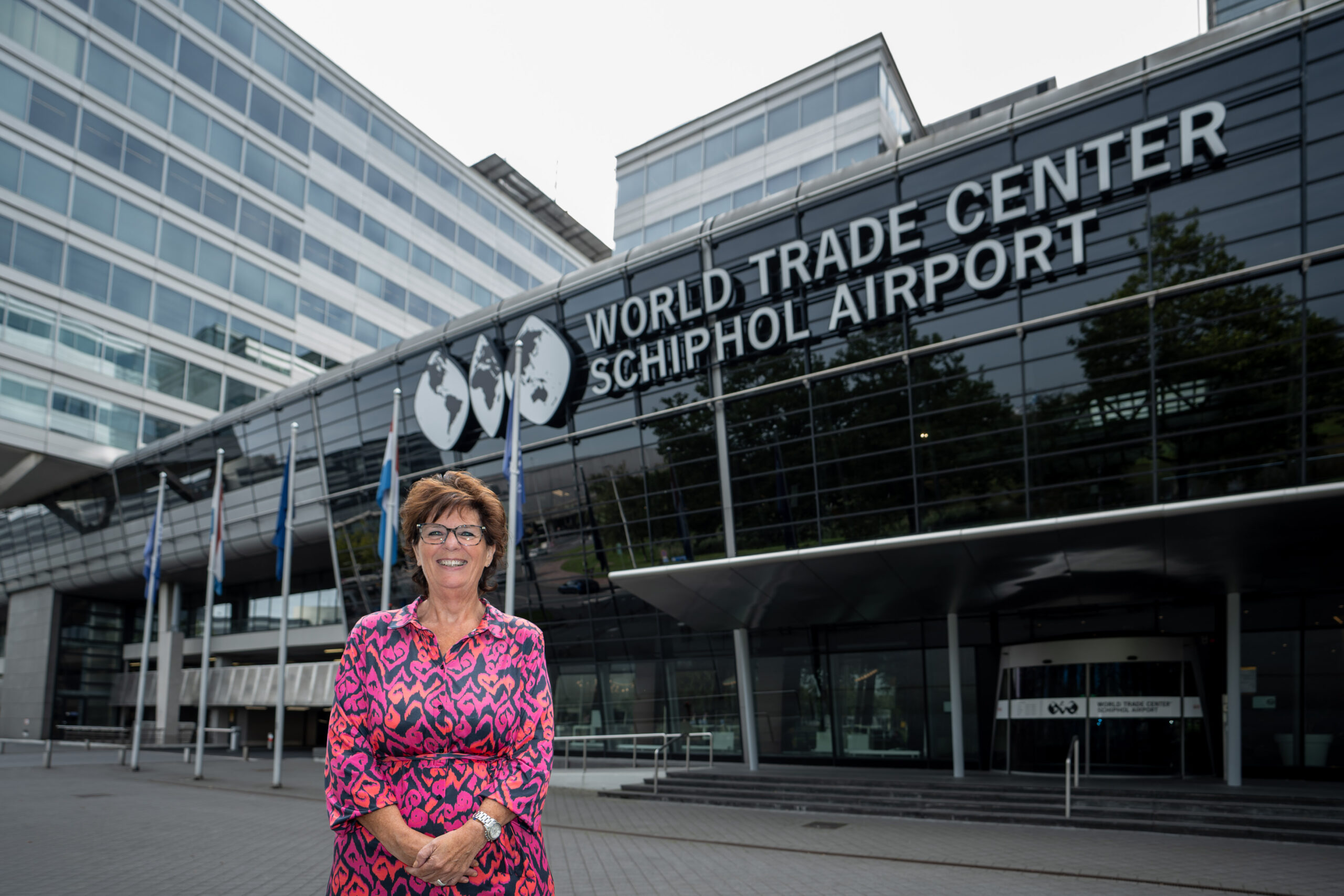
Until recently, Delta was literally located above the departure halls, practical, but busy, outdated, and right in the middle of the hustle. During an implementation with KLM, the need arose for a place that offered calm, structure, and focus. The move to WTC Schiphol Airport turned out to be exactly the environment in which the team could continue to grow. The modern spaces, quiet work areas, training facilities, and lively spots such as Fortune Bar and STACH created a new balance. And the terminal is still only a five‑minute walk away. “It feels like the best of both worlds,” Markus says.
A new beginning
Privately, Markus took at least as big a step. When he and his wife Kiera moved to the Netherlands, Kiera left her scientific career in the United States behind. In the Netherlands she found the opportunity and space to pursue an old dream: studying medicine. She started entirely in Dutch and is now in her fifth year of the program. Markus speaks about it with visible pride. His own background is just as international: he grew up in the U.S., regularly visited the Netherlands as a child, and, thanks to his German‑American background, always maintained a strong connection with Europe.
Settling in the Netherlands happened step by step, but never via the expat route. Markus and Kiera wanted to live in the heart of society and chose Utrecht. They learned the language, built friendships, and became part of everyday life. Markus especially appreciates the directness of the Dutch. “You say what you think, but always respectfully. It makes teams stronger.”
There is one thing the Netherlands does not have: the silence of American nature. The forests around Seattle, the Appalachians near Atlanta, the endless spaces without reception and without sound. “Not better or worse, just different,” he says matter‑of‑factly.
Building never stops
At home, Markus still builds. His tool cabinet is sacred. He does DIY projects, cycles on his road bike, gravel bike, and mountain bike, and somewhere in the house is still his German violin, a cherished piece of his youth that has always traveled with him.
Anyone who asks what he shares with new colleagues won’t get a management model, but a principle that is deeply embedded in him, the core of how he leads and collaborates: