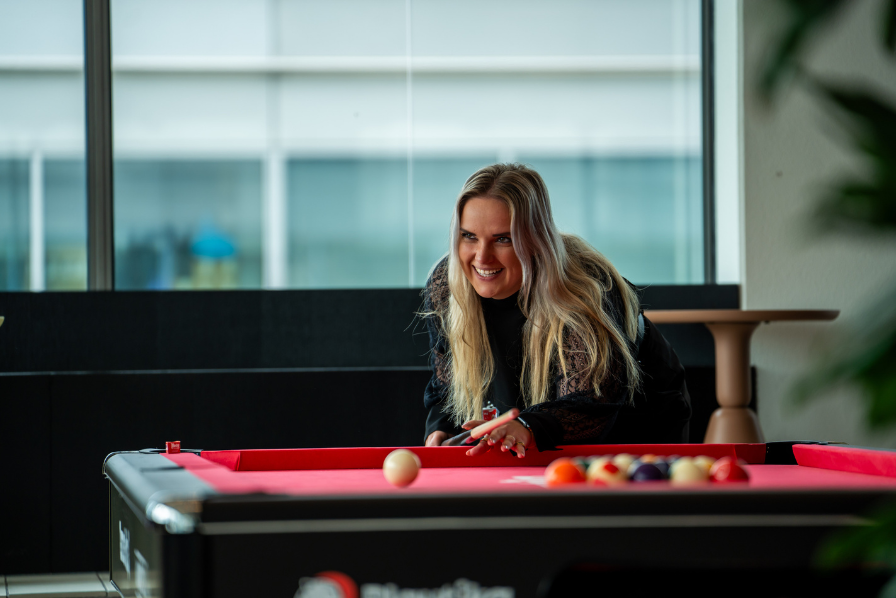
Raisa ten Brink

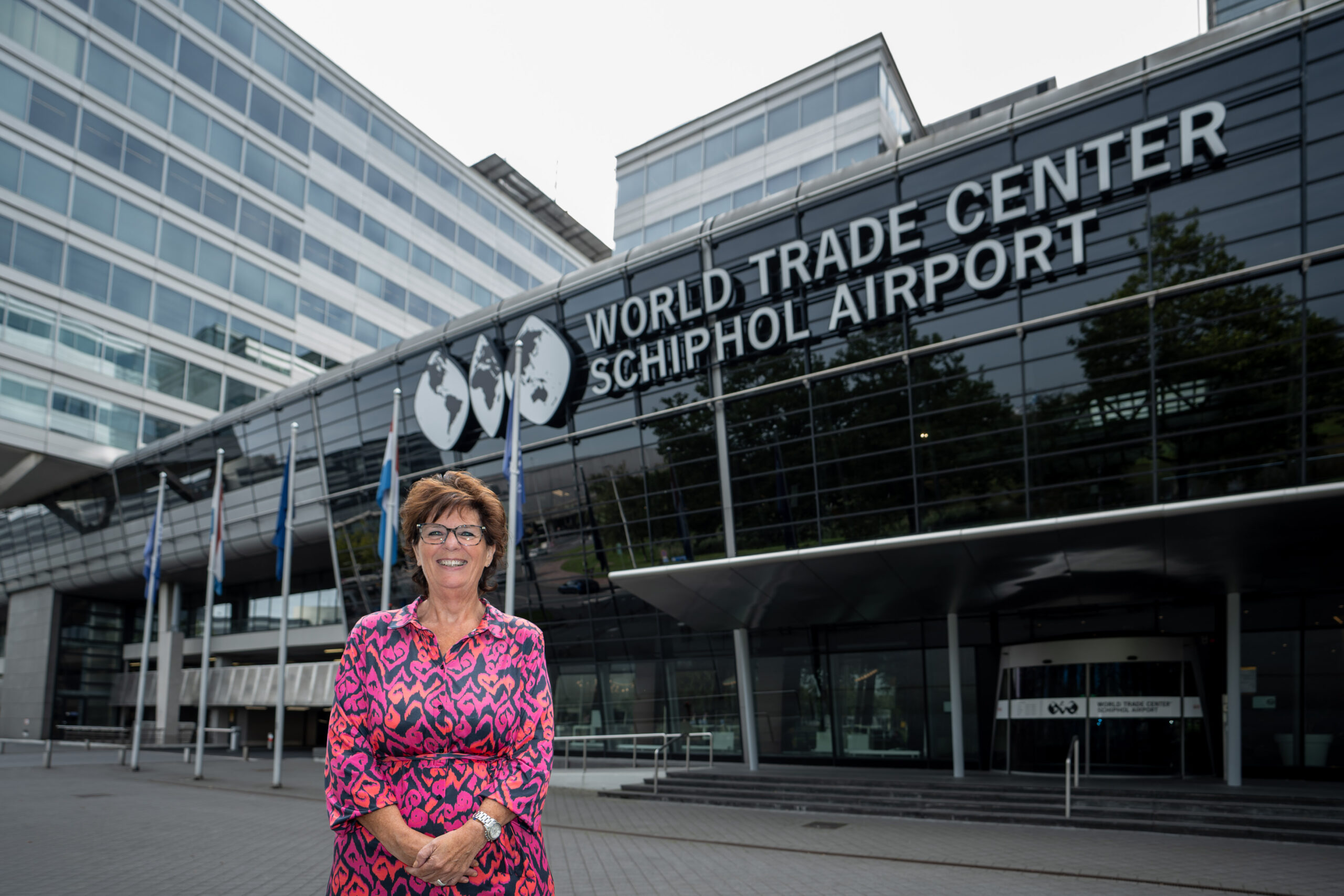
Anyone walking past the Playtika studio usually sees her first. Raisa ten Brink: a calm smile behind the reception desk, a brief greeting, a question asked at exactly the right moment. This is someone who feels the rhythm of a place. She calls herself Office Administrator, not Office Manager, because her work is precisely the combination of the tangible and the administrative.

A desk full of post‑its, an office full of stories

The fridge stocked, the coffee machine running, the office tidy; but just as much the invoices, finance, bookkeeping, and budgets that pass through her hands.

“Creating chaos in order to solve chaos,” she says with a wink. On her desk,“bigger than the boss’s”, lies a landscape of post‑its: names, deadlines, payments, parcels, events, “now” and “later.” Her system, and her way of creating overview in a world that is always moving.

She has worked at Playtika since October 2023, initially through secondment. After two weeks of vacation she returned to hear that they wanted to offer her a permanent contract. She had never had one before. “At my age, that felt big and sincere: really nice.”

Reception, rhythm, and buzz

Her spot behind the reception desk is more than just a desk. It is a crossroads of the office. Everyone passes by. Sometimes for a piece of fruit, sometimes for a quick question, sometimes just for a moment of contact. Raisa remembers what people tell her: partners, children, small successes, big worries. Not to use it later, but to truly see someone.

Recently she sent flowers to a colleague whose wife had knee surgery. The thank‑you, “didn’t expect it, so sweet”, touched her. “Being able to do something that makes someone feel seen, that’s what makes me happy.”

At work, Raisa is extroverted; at home, introverted. “At home I don’t have to do anything for a while. That’s my place where I don’t have to perform.” Still, she consciously chooses to be in the office five days a week.

“WTC Schiphol Airport is alive. There’s rhythm.”

A move that shaped her

The biggest project came even before a single desk stood in WTC Schiphol Airport: the move of Youda Games from the Microsoft building to WTC Schiphol Airport. The project manager and architect were abroad; Raisa became the Dutch point of contact.

She arranged, coordinated, and communicated. She learned that sometimes you have to explain a move in “baby language.” Not out of condescension, but out of understanding. Two boxes per person, a blue sticker here, a red sticker there, forms, labels, clear instructions. The clearer you are, the fewer questions come back.

She walked daily between the old and new offices, including weekends. She intercepted problems nobody had anticipated. She was present when deliveries arrived. She kept everything running, without ever having to make choices about flavors or furniture, and she’s glad about that. “If someone says, ‘what an ugly table,’ I’d carry that with me. Let me just make sure everything works.”

When the opening party took place on February 10, 2025, managers from several countries were present. Speeches were given. “Thank you, Raisa.” Fifty faces turned toward her. Uncomfortable, but valuable. “It was nice that the effort was seen.”

Work you don’t see, but do feel

There is the visible work: a full fridge, a coffee machine that works, a reception desk everyone passes. And there is the behind‑the‑scenes work: invoices, budgets, unexpected payments, problems that have to be solved before anyone else notices. In addition, there are events, team trips, schedules full of flights from Schiphol, Eindhoven, and Spain.

Throughout the year she arranges gestures for colleagues: Easter, Sinterklaas, babies, deaths, engagements. Her days are never the same. And in an environment where 70% speaks English, she quickly mastered professional English as well. “We help each other. That’s normal here.”

From Zandvoort to WTC Schiphol Airport

Raisa grew up in Zandvoort. A childhood filled with work: a paper route, Albert Heijn, and especially Domino’s, where she worked as a shift manager. The “rush” was an hour of chaos, after which you’d be laughing together in the backyard. They were friends. After closing, you sometimes went to the beach together for a beer or a glass of wine.

After Coolblue and Coolblue Energy, where she worked fully from home during COVID (“it makes you lazy”), she made the move to Playtika. A recruiter convinced her in three days. “I had never applied for a job before. I saw it as practice. It became my job.”

Dance, discipline, and dreams

Dance is a world that will always be part of her. She wanted to become a dancer, completed dance training, obtained an EVC, taught competitive teams and soloists for years. She created choreographies, mixed music, and performed herself. Intense and creative work, but also heavy. Now she dances Zumba with her mother. “It’s still there.”
Her girlhood dream: someday go to New York. To Broadway. Wicked. Hamilton. “It’s going to happen.”

Home, head, and heart

At home there is silence. A place where she doesn’t have to do anything. She would love to have a dog, but with five days in the office she doesn’t feel that would be fair. She has considered adopting an older shelter cat, but then she looks at her couch. “Some choices are practical.”

The love of her parents forms the foundation of everything. They gave her the freedom to discover herself and were always there. She calls them, eats with them, plays games with them. Her parents run their own land‑surveying and consultancy business and often pass by her place on their way to Zandvoort. She grew up with little, in social housing. She saw how her father built a company with a business partner. How things gradually improved. How they were later able to buy a house. She bought a house herself too, with help from her parents, just when that was still fiscally possible. “I want to learn and grow. Throw me into the deep end, I’ll swim.”

She was bullied in the past, sometimes harshly. It makes attention feel tense. But she doesn’t let it limit her growth.

“Don’t be afraid to make mistakes, and trust your own judgment. You often know more than you think. Don’t let yourself be thrown off by other people’s doubt.”